
A bright laser-cut edge can still cut a hand, catch during assembly, or leave a weak spot in a coating. A dark edge can carry oxide and attached dross that demand a different finishing sequence. Assist gas helps explain those conditions, but it does not tell you whether a part is ready to ship.
For nitrogen vs oxygen cutting parts deburring decisions, start with the material, inspect the actual edge, and check what happens next. Nitrogen cutting is common for stainless steel and aluminum; oxygen cutting is mainly used for carbon steel. Both can produce parts that need finishing, and neither gas is simply better for every job.
What Each Gas Leaves on the Cut Edge
Nitrogen acts as an inert assist gas during cutting. It helps eject molten metal without deliberately adding oxygen to the cut, typically leaving a bright, oxide-free edge. That appearance is useful for visible components, but thin, hard burrs can remain along the underside. Gas choice alone cannot guarantee a burr-free result.
Oxygen supports an exothermic reaction with the steel, adding heat to the cutting process. On carbon steel, it leaves an oxide scale layer on the cut face. Dross or slag can also attach to the lower edge, particularly on thicker plate or when cutting conditions are less favorable. Oxide scale and attached slag are separate problems and may require different tools.
Both methods can leave sharp edges even when visible burrs are small. Check the cut face, bottom edge, holes, and internal profiles separately. Our explanation of why laser-cut parts still have burrs gives more context for evaluating the edge rather than judging only its color.
Nitrogen-Cut Parts: Clean Edge, Still a Burr Problem
Oxide-free does not mean finished. A thin burr may feel minor during inspection yet break away later, interfere with seating, or leave an irregular surface under paint. Small, hard burrs can compromise coating adhesion locally, while sharp edges can leave thin coating coverage and create handling hazards. The clean cut face does not resolve those issues.
Nitrogen-cut components are often appearance or coating parts: covers, panels, brackets, and visible assemblies. For these jobs, deburring removes unwanted projections, while edge rounding creates a more consistent radius. The objective is controlled burr removal and edge geometry, rather than oxide removal. Specify the required edge condition instead of requesting an undefined polished finish.
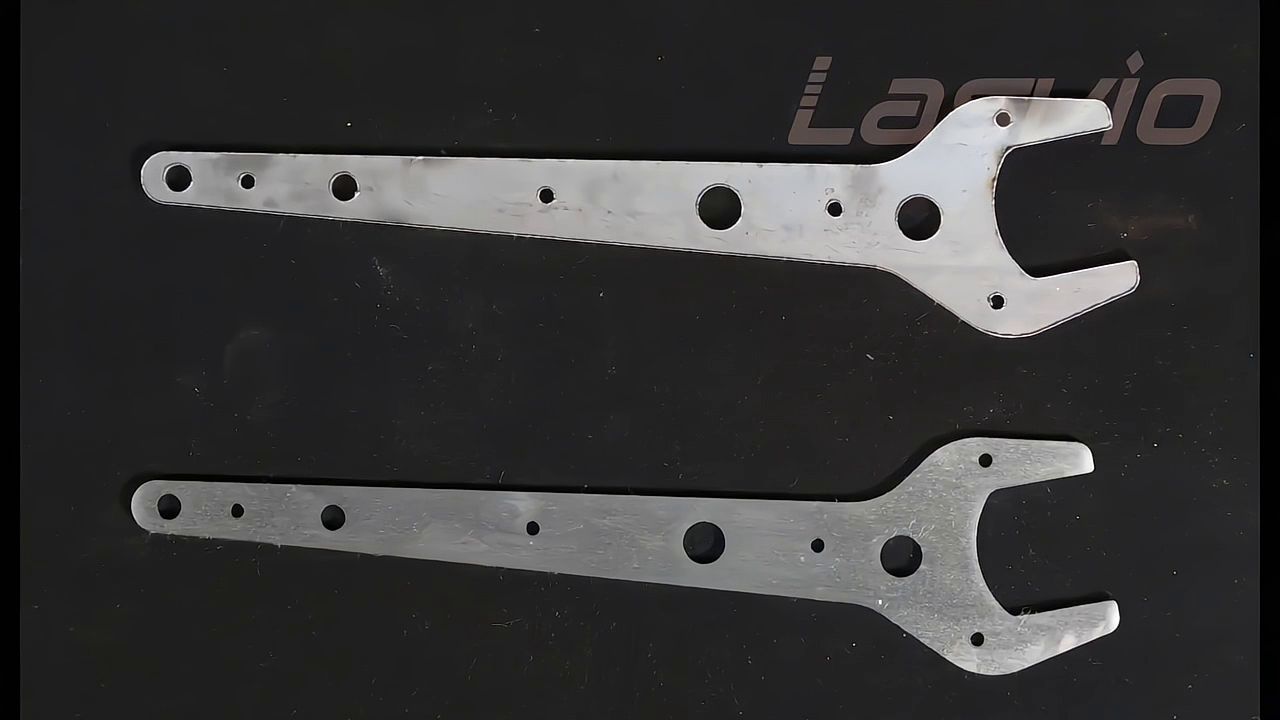
The carbon steel comparison above illustrates an edge inspection point; it does not establish which assist gas cut the sample. For your own parts, compare the underside and internal openings before and after finishing. Preserve dimensional features and agree on acceptable surface marks, especially where a visible face must remain suitable for the final finish.
Material also affects workholding. Magnetic holding applies to carbon steel and other ferromagnetic parts. Austenitic stainless steel is non-magnetic for this purpose, and aluminum also requires another suitable holding method. A successful trial must demonstrate stable transport for the actual material, part shape, and contact area.
Oxygen-Cut Parts: Oxide and Dross Set the Work
For oxygen-cut carbon steel going to coating, remove the cut-edge oxide scale so the coating can bond to a sound substrate. Paint adhering to a weak scale layer can detach with that layer. Before welding, remove oxide from the joint area as required by the welding procedure; residual oxide can interfere with weld quality. Adhesion is the coating concern, while joint cleanliness is the welding concern.
Heavy attached dross on thick plate calls for a heavy slag removal pass before fine deburring and edge rounding. Asking finishing brushes to do all the heavy removal work can leave an inconsistent result and unnecessary tool wear. Once the large deposits are gone, inspect for residual burrs and determine the required edge break.
Do not assume that removing bottom-edge slag also cleans the entire vertical cut face. Confirm which surfaces the selected tooling actually reaches, including holes and narrow slots. If cut-face oxide remains, the process needs an additional suitable cleaning step. The distinction between laser slag and plasma dross removal helps frame the initial removal task.
There is an honest exception: structural parts with no coating and no appearance requirement may need only minimal finishing. If attached material does not affect fit or function, and exposed edges meet handling and fabrication requirements, a light edge break or possibly no additional finishing can be acceptable. Drawing requirements, welding needs, and safe handling still govern that decision.
Decide by the Downstream Process, Not the Gas Alone
Use the questions below as a practical routing checklist. Combine the answers: a visible, painted component handled during assembly may need more finishing than a concealed structural member. Inspect representative parts from the production batch, because thickness, geometry, and cutting condition can change the result even with the same assist gas.
- Will it be coated or painted? Remove burrs and prepare an appropriate edge radius: full deburring plus edge rounding is often suitable. Oxygen-cut edges also need oxide removal; heavy attached slag requires slag removal before deburring. Match final preparation to the coating specification.
- Will it be welded? Clean the joint surfaces and remove burrs or deposits that obstruct fit-up. Use slag removal plus deburring where heavy deposits exist; a light edge break may suffice elsewhere. Follow the joint drawing before rounding an edge that must retain its weld preparation.
- Will it be visible to the end customer? Consider full deburring plus edge rounding when a consistent perimeter matters. Agree on acceptable face marks and edge appearance with a sample, rather than assuming that every visible part needs the same treatment.
- Will operators handle it? Accessible sharp edges generally justify at least a light edge break. Pronounced burrs may require full deburring plus edge rounding. Check internal cutouts and handling points as well as the outside profile.
- Does it have a tight assembly fit? Remove burrs that prevent seating, but protect tolerances and locating features. Possibly skip further finishing only when inspection confirms acceptable edges, fit, handling, and downstream requirements. Gas choice by itself is insufficient evidence.
One Finishing Line for Both Cutting Methods
A line serving both cutting methods can use a deslagging station for oxygen-cut thick carbon steel plate, followed by tooling selected for remaining burrs and the required edge radius. Lasvio’s heavy slag removal equipment addresses the initial deposit-removal stage. Confirm cut-face oxide removal separately when coating or welding requires it.
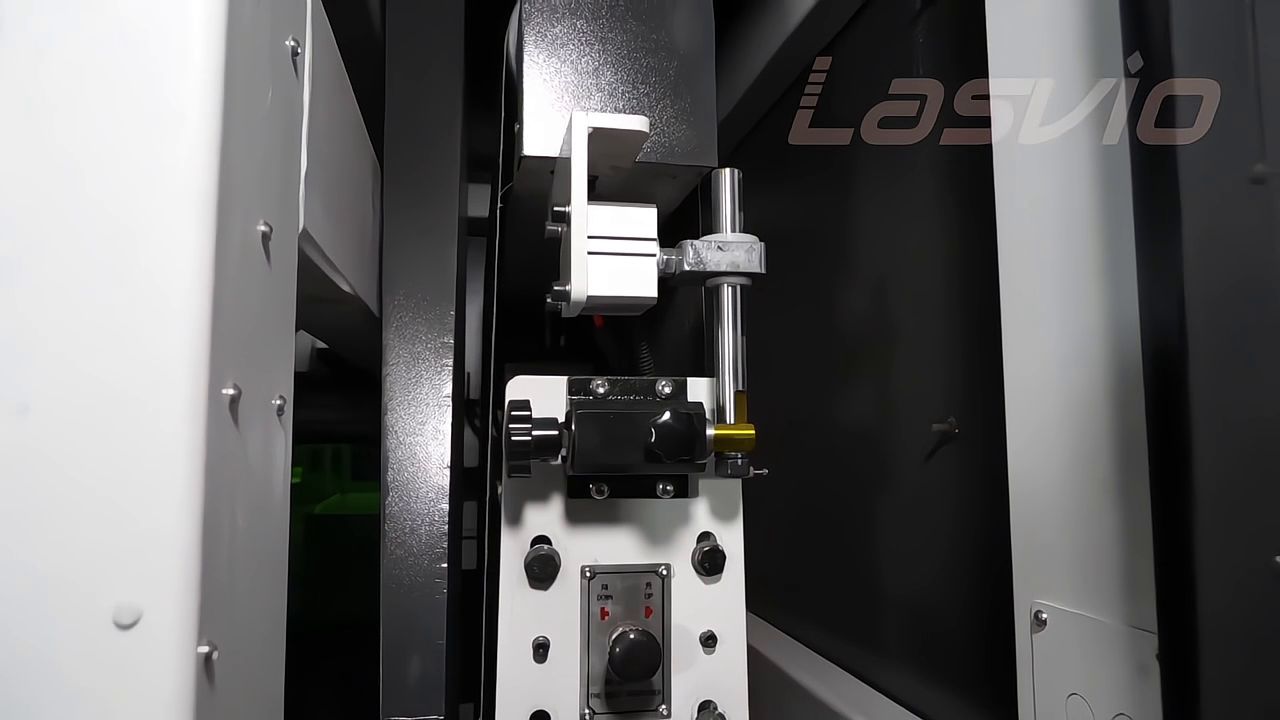
For nitrogen-cut bright parts, configure the brush stage around burr removal, edge rounding, and acceptable surface appearance. A deburring and edge rounding machine can form part of that route. Tool selection, contact, and workholding should suit the material and geometry; small ferromagnetic carbon steel parts may use magnetic holding, while aluminum and austenitic stainless need suitable alternatives.
Treat these as configurable process routes rather than a promise that every part follows every station. Verify the sequence with actual samples, checking residual deposits, edge condition, fit, and visible surfaces. That trial establishes whether a heavy removal stage, a brush pass, or a lighter edge treatment meets the job requirements.
FAQ
Do nitrogen-cut parts need deburring?
Often, yes. Nitrogen can leave a bright, oxide-free cut face while thin burrs and sharp edges remain. Inspect the part against its coating, handling, and assembly requirements.
Do oxygen-cut parts always need heavy slag removal?
No. Heavy slag removal is appropriate when substantial attached deposits are present. Parts with little dross may need oxide cleaning and lighter deburring instead.
Does deburring automatically remove oxygen-cut oxide scale?
No. Burr removal and cut-face oxide removal are different tasks. Verify that the selected tools reach and clean the surfaces required by the downstream process.
Can magnetic holding secure all nitrogen-cut parts?
No. Magnetic holding suits ferromagnetic materials such as carbon steel. Aluminum and austenitic stainless steel require another suitable holding method.
When can a cut part skip additional finishing?
It may skip finishing when inspection confirms acceptable edges, fit, handling, and downstream requirements. Uncoated structural parts without appearance requirements are a possible example, subject to drawing and fabrication needs.
Choose the finishing route from the edge you have and the part you need to deliver. To check a practical setup for your material and geometry, send Lasvio your part drawings or samples for a test run.