
An Automatic Dross Removal Machine should be selected by testing the actual slag, part geometry, production volume, and required surface after removal—not by working width or motor power alone. Before buying, confirm what type of slag the tooling can remove, how small and large parts are held, whether the base material is affected, how many passes are needed, what consumables cost, and what evidence the supplier can provide from representative sample testing.
For procurement teams, the most useful comparison is the cost and consistency of a finished part. A machine that removes heavy slag in one controlled pass may deliver better value than a lower-priced unit that consumes belts quickly or still requires manual touch-up. The quotation should therefore connect the machine configuration to measurable test results.
What Is an Automatic Dross Removal Machine?
It uses mechanically aggressive, flexible tooling to strike and break attached slag or dross from thermally cut steel parts. Unlike an abrasive belt, which removes material through grinding, an automatic Dross Removal Machine is intended to target raised deposits with less unnecessary contact across the flat surface.
The process is commonly considered for plasma-cut, oxy-fuel-cut, air-cut, and thick laser-cut carbon steel parts carrying hard bottom-side residue. It normally comes before fine deburring, edge rounding, or brushing. If you are still deciding between the two tool types, read deslagging disc vs abrasive belt for heavy slag removal.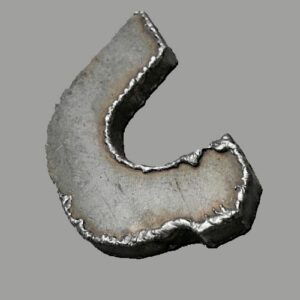
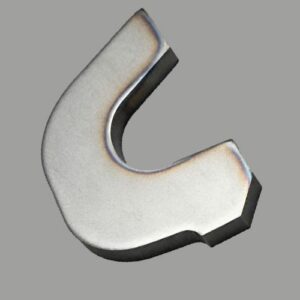
9 Questions to Ask Before Buying an Automatic Dross Removal Machine
1. What Type of Slag Can the Machine Remove?
Ask the supplier to separate loose beads, intermittent dross, continuous attached ridges, and ordinary cutting burrs. These conditions do not require the same process. A general statement such as “suitable for laser parts” is not enough because slag behavior changes with the cutting process, material thickness, gas, parameters, and part temperature.
Send close-up photographs of the underside and side edge, but do not rely on photographs alone when the deposit is severe. Physical samples provide much stronger evidence.
2. Is an Automatic Dross Removal Machine the Correct Tool for the Actual Part?
An automatic Dross Removal Machine is not automatically the best solution for every burr. Light laser burrs may be removed efficiently with an abrasive belt or brush. Heavy attached deposits may require disc or hammer-style tooling before the abrasive stages.
The supplier should explain why the proposed module matches the defect and what the surface will look like after removal. For a wider process overview, see our guide to deslagging steel and removing slag from cut parts.
3. What Part Sizes Can Be Processed Safely?
Working width only describes the largest nominal width. Buyers must also confirm the smallest part width, the minimum and maximum thicknesses, internal cutouts, and whether formed parts can fit in the machine.
Small or light carbon steel parts may use magnetic holding. Other materials or geometries may require vacuum suction or another conveyor arrangement. Include the smallest recurring part in the test batch rather than testing only large, stable plates.
4. Will the Process Affect the Base Material?
The goal is to remove the attached deposit without unnecessary stock removal, dimensional change, or uncontrolled marking of visible surfaces. State any critical dimensions, surfaces that must remain cosmetic, and edges that must remain sharp.
Ask the supplier to inspect the flat surface and edge after testing. When tolerances are important, measure the sample before and after processing instead of judging only by appearance.
5. How Many Passes Are Required?
A quoted conveyor speed has limited value if the part must pass through the machine several times. Record the feed speed, tool setting, number of passes, and manual touch-up required after each test.
Use the worst recurring slag condition when evaluating one-pass claims. A clean demonstration sample may not represent everyday production.
6. What Happens After Heavy Slag Removal?
Some factories need only to break off the deposit before welding. Others require burr removal, a safer rounded edge, oxide removal, or a brushed surface before coating and assembly.
Confirm whether the machine is deslagging-only or can combine modules in the correct sequence. Heavy deposits should normally be removed before fine abrasive processing and edge rounding. The slag removal machine selection guide explains how to match the process sequence to the next production step.
7. What Are the Consumable and Maintenance Costs?
Request the automatic dross removal machine specification, expected replacement procedure, quantity installed, unit price, normal inspection points, and recommended spare-parts package. Tool life should be presented as an application-dependent estimate, not a universal number.
Ask what conditions shorten tool life and whether the operator can replace and calibrate the tooling without specialist support. Compare expected consumable cost per shift or per batch after sample testing.
8. What Safety and Electrical Configuration Is Included?
Confirm guarding, door interlocks, emergency stops, grounding, overload protection, dust-extraction connections, voltage, frequency, electrical components, and documentation. International buyers should state whether a CE-compliant configuration and English electrical drawings are required.
These items should appear in the quotation and technical agreement. They should not be left as assumptions after the order is placed.
9. What Installation and Support Are Included?
Clarify packaging, freight terms, installation, commissioning, operator training, remote support, warranty, spare parts, and response procedures. A lower machine price may exclude services needed to start production.
Ask the supplier to provide a clear scope showing what is included, optional, and excluded. This makes quotations easier to compare and reduces unexpected project costs.
Purchasing Comparison Checklist
| Comparison Item | Evidence to Request |
|---|---|
| Slag-removal result | Before-and-after close-up photos of the same parts |
| Process consistency | Several parts from one batch, not one selected sample |
| Throughput | Feed speed, passes, loading time, and manual touch-up |
| Part stability | Video showing the smallest and most difficult parts |
| Surface effect | Flat-surface and edge inspection after processing |
| Consumables | Tool specification, quantity, price, and replacement method |
| Safety | Written list of interlocks, guarding, grounding, and standards |
| Delivered scope | Machine, options, spares, training, freight, and installation |
How to Run a Representative Sample Test
A useful test batch should include normal parts and the worst recurring production condition. Include different thicknesses, external edges, internal cutouts, narrow sections, and the smallest part that must run automatically.
Record the following for every test:
- Cutting process, material, and thickness
- Part dimensions and weight
- Description of the slag before processing
- Tool configuration and feed speed
- Number of passes
- Whether the part remained stable on the conveyor
- Slag remaining after the machine
- Manual touch-up time
- Surface and edge condition
- Suitability for welding, coating, or the next operation
This evidence section should be completed with real photos, settings, and observations from the buyer’s samples. Avoid publishing unsupported claims about tool life, one-pass removal, or hourly output when test conditions are not available.
Lasvio Deslagging and Heavy Slag Removal Solutions
Lasvio is a deburring machine manufacturer supplying equipment for sheet metal deburring, edge rounding, surface finishing, precision grinding, and heavy slag removal. Configurations are selected around the actual cutting residue, material, part size, production volume, and required next process.
Available solutions can combine aggressive slag-removal tooling with abrasive belts and multidirectional brushes. Magnetic and vacuum holding arrangements can be configured according to the workpiece. CE-compliant configurations are available for export projects.
To compare an automatic dross removal machine using real production evidence, send Lasvio representative parts or detailed slag photos for sample testing. Include material, thickness, dimensions, volume, destination voltage, and the required result after processing.
Frequently Asked Questions
Is an automatic dross removal machine only for plasma-cut parts?
No. It may also be considered for oxy-fuel, air-cut, or thick laser-cut parts when hard attached residue is present. The actual slag condition should determine the tooling.
Can an automatic dross removal machine process stainless steel or aluminum?
Possibly, but material, residue type, surface sensitivity, and conveyor holding must be evaluated. Carbon steel is often easier to hold magnetically, while other materials may require vacuum suction.
Will an automatic dross removal machine round the edges?
Its primary job is heavy-deposit removal. A separate brush or edge-rounding module is normally used when a controlled rounded edge is required.
How should two machine quotations be compared?
Use the same sample batch and record passes, feed speed, manual touch-up, consumables, surface result, safety configuration, and delivered scope. Do not compare machine width and purchase price alone.
What is the most important part to include in sample testing?
Include the worst recurring slag condition and the smallest or least stable part. A machine should be evaluated against the difficult production cases, not only a clean demonstration plate.
When is manual slag removal still practical?
Manual tools may remain practical for prototypes, repairs, and occasional irregular batches. Automation becomes more attractive when slag removal creates daily queues, inconsistent quality, or several manual grinding positions.