
HBB Heavy-Duty Deslagging Machine
The heaviest slag configuration in the Lasvio range. A hammer station fractures severe, hard-bonded slag on thick thermal-cut parts, then two abrasive belts strip it away and refine the surface — so the parts that defeat belt-only machines come out clean and finished in a single pass.
- Hammer + two-belt configuration
- 800–1,600 mm working widths
- For the heaviest plasma- and oxy-fuel slag on thick plate
- Cleaner, finished surface in the same pass
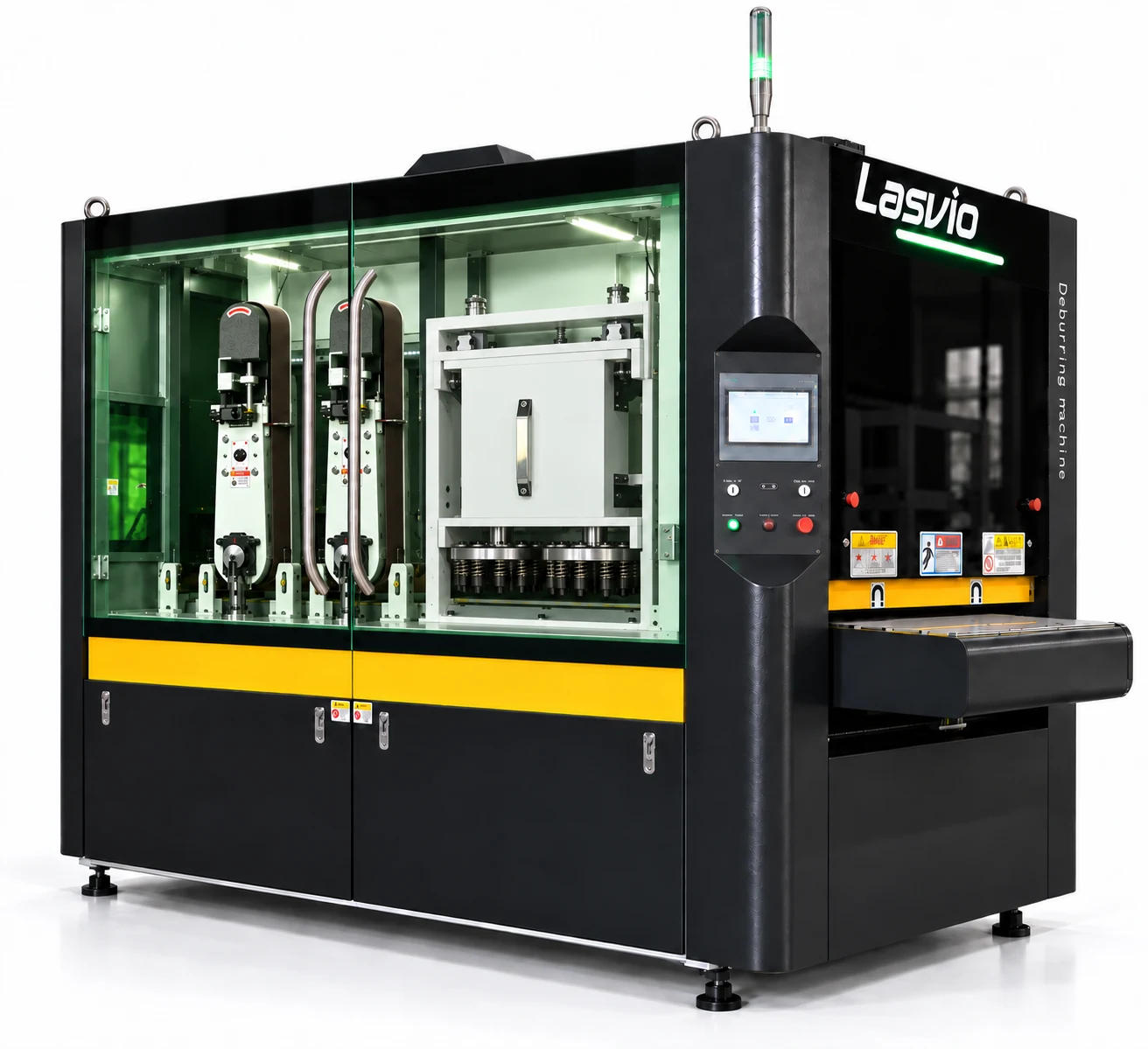
HBB Quick Facts
Configuration: Hammer station + 2 abrasive belts
Working Widths: 800 / 1,000 / 1,300 / 1,600 mm
Best For: The heaviest plasma and oxy-fuel slag, where the surface also has to come out clean in the same pass
Hold-Down: Magnetic conveyor table
One-Pass Result: Severe slag removed, surface levelled and refined
CE Certified · 2-Year Warranty · Global Service Network · Factory-Direct Support
What the HBB Is Made to Remove
Severe slag is the deposit that survives everything else: thick, glass-hard dross fused to thick plasma- and oxy-fuel-cut plate, bonded too strongly for an abrasive belt to shift on its own. The HBB exists for exactly this material. Its hammer station breaks the slag’s bond by impact, the first belt strips the fractured residue and oxide skin, and the second, finer belt levels and refines the surface — heavy-duty deslagging and a finished surface in one configuration.
If your slag is lighter, step down, not up: standard dross is the BB‘s job, and heavy slag that does not need a refined finish is the HB‘s. If the parts also need edge rounding, look at the BR family instead — the HBB removes slag and finishes surfaces, but it does not round edges.
Inside the HBB: Hammer First, Two Belts to Finish
Part flow runs from the entry-side hammer station to the exit-side second belt.
Station 1 · Hammer Head
High-speed rotating hammer discs strike the surface and fracture the heaviest slag and dross on thick thermal-cut parts — the bond is broken before any abrasive touches it.
Station 2 · First Belt — Coarse Grit
The first abrasive belt strips the fractured slag and oxide skin and takes the surface down to clean metal.
Station 3 · Second Belt — Finer Grit
The second, finer belt levels and refines the surface in the same pass, so parts leave ready for coating, welding or assembly prep.
Magnetic hold-down: carbon-steel parts are held flat on the conveyor with no clamps, so small parts run safely at full feed speed.
Processing Capability
The HBB is a through-feed heavy slag removal machine for thermal-cut carbon steel. In one pass it fractures heavy slag by hammer impact, strips the fragments with abrasive belts, and leaves every part clean and consistent for the next process.
- Heavy slag fracturing — Rotating hammer discs break thick, strongly bonded slag at its bond with the part.
- Slag & dross removal — The abrasive belts strip fractured slag, dross and remaining deposits from the surface.
- Oxide skin removal — Removes the oxide layer left around thermal-cut profiles before further processing.
- Surface levelling and refining — The two belts level and refine the surface in the same pass, with no separate grinding step.
- Uniform one-pass result — Every part receives the same hammer-and-two-belt treatment, with no operator-dependent variation.
- Ready for the next process — A clean, consistent surface that forms a solid foundation for welding, coating and assembly.
Maximum Slag Power, Finished Surface
The Hammer Does the Heavy Work
Impact fractures slag that would glaze or tear an abrasive belt, so the belts behind it work on broken residue instead of a fused deposit.
Two Belts, Two Finishes
A coarse first belt strips and levels; a finer second belt refines. One configuration does the deslagging and the finishing pass together.
No Separate Finishing Step
Because the surface comes out levelled and refined, thick parts go straight to coating, welding or assembly prep — no second machine, no manual touch-up line.
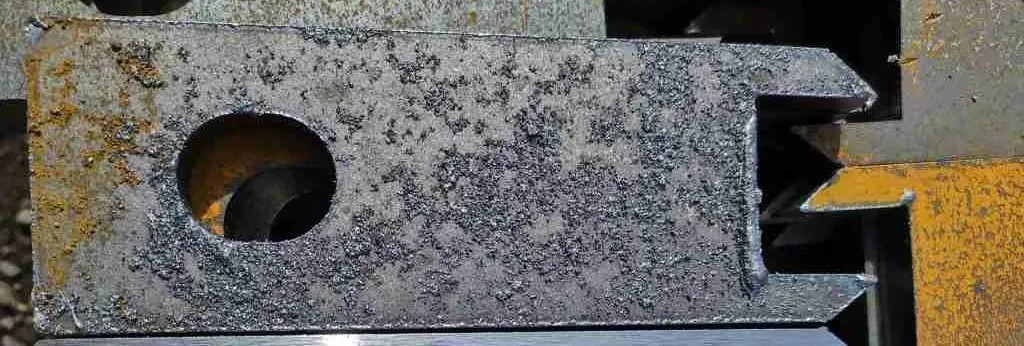
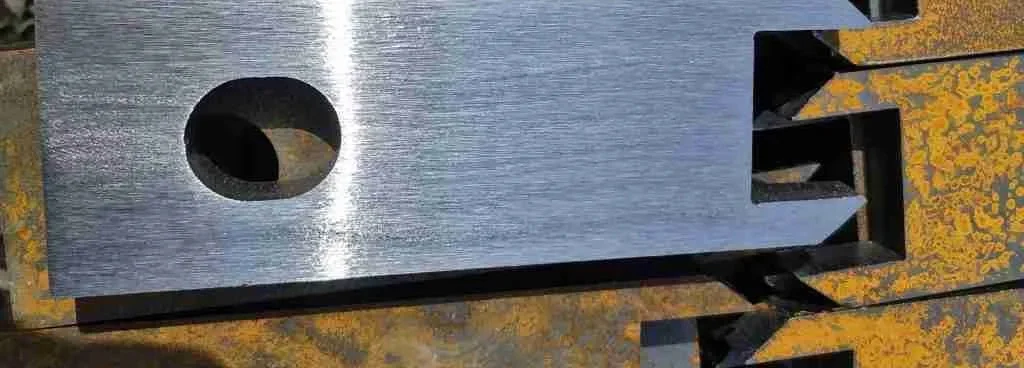
Before and After One HBB Pass
Thick-cut workpiece after one HBB pass — slag gone, surface levelled.
BEFORE
AFTER — ONE PASS
HBB Is the Right Choice When…
- Your thick plasma- or oxy-fuel-cut parts carry the heaviest, hardest slag in the shop
- Belt-only machines leave slag behind — or belts wear out trying
- The surface must come out clean and finished in the same pass, ready for coating or welding
- Manual chipping and grinding is your bottleneck on thick plate
Choose Another Configuration When…
- Standard dross and moderate slag: choose BB
- Heavy slag, but one belt finish is enough: choose HB
- Parts need deburring with edge rounding: see the BR, HBR, BBR and BRB configurations — Deburring & Edge Rounding
- Stainless steel or aluminium parts: those run on vacuum hold-down — start from all slag removal configurations and talk to us about the right setup
Compare the Slag Removal Configurations
| Configuration | BB | HB | HBB |
|---|---|---|---|
| Configuration | 2 abrasive belts | Hammer station + 1 abrasive belt | Hammer station + 2 abrasive belts |
| Main Result | Standard dross removed, surface levelled | Heavy slag fractured, stripped and levelled | Heaviest slag removed, surface levelled and refined |
| Choose It When | Dross and slag are standard and a belt can strip them directly | Slag is heavy and hard, but a single-belt finish is enough | Slag is at its heaviest and the finished surface matters in the same pass |
Compare all slag removal configurations
HBB Technical Specifications
| Configuration | HBB — hammer station + two abrasive belt stations |
| Working Widths | 800 / 1,000 / 1,300 / 1,600 mm |
| Main Process | Heavy slag removal, dross removal and surface refining |
| Typical Parts | Thick plasma-cut and oxy-fuel-cut carbon steel parts with severe slag |
| Processing Thickness | 0.5–80 mm |
| Feeding Speed | 1–5 m/min |
| Sanding Belt Speed | 5–13 m/min |
| Hammer Rotation Speed | 9–24 r/s |
| Hold-Down | Magnetic conveyor table |
| Power Supply | 380 V AC, 50/60 Hz (customizable) |
| Air Pressure Required | 0.5–0.8 MPa |
| Service | CE Certified · Global Service |
All listed safety, servo-control, electrical and auto-compensation features are standard equipment.
HBB Heavy-Duty Deslagging Machine — Frequently Asked Questions
What does the Lasvio HBB remove?
The HBB removes the heaviest, hardest slag and dross from thick thermal-cut carbon steel parts — the severe, strongly bonded deposits left by plasma and oxy-fuel (flame) cutting on thick plate, which belt-only machines cannot shift on their own.
How is the HBB different from the HB?
Both configurations break slag with a hammer station first. The HB follows it with one abrasive belt; the HBB follows it with two — a coarse belt that strips the fractured slag, then a finer belt that levels and refines the surface in the same pass.
When is the HBB more machine than I need?
If your slag is standard dross, the two-belt BB removes it without a hammer station. If your slag is heavy but the finished surface does not matter, the HB’s single belt is enough. The HBB earns its place when the slag is at its heaviest and the surface has to come out finished in the same pass.
Does the HBB round edges?
No. The HBB is a slag removal and surface finishing configuration, and does not include a dedicated rotary-brush edge-rounding station. For deburring with controlled edge rounding, see the BR, HBR, BBR and BRB configurations.
How do I confirm whether HBB fits my parts?
Send the material, thickness, part size, cutting process and clear photos of the slag on both sides — or arrange a sample test on your actual parts. Slag severity and the finish you need are what decide between HB and HBB.
Send Your Parts for an HBB Test
Thick parts with slag that will not move? Send us the part details and photos — or your actual parts — and we will run them on the HBB configuration and show you the finish. If a lighter configuration (the BB or the HB) honestly does the job, we will tell you.
Request a Quote Chat on WhatsApp
Compare all slag removal configurations Installation, warranty and support
← Previous: HB Heavy Slag Removal All Slag & Dross Removal Configurations →