
BRB Belt, Rotary Brush & Belt Deburring Machine
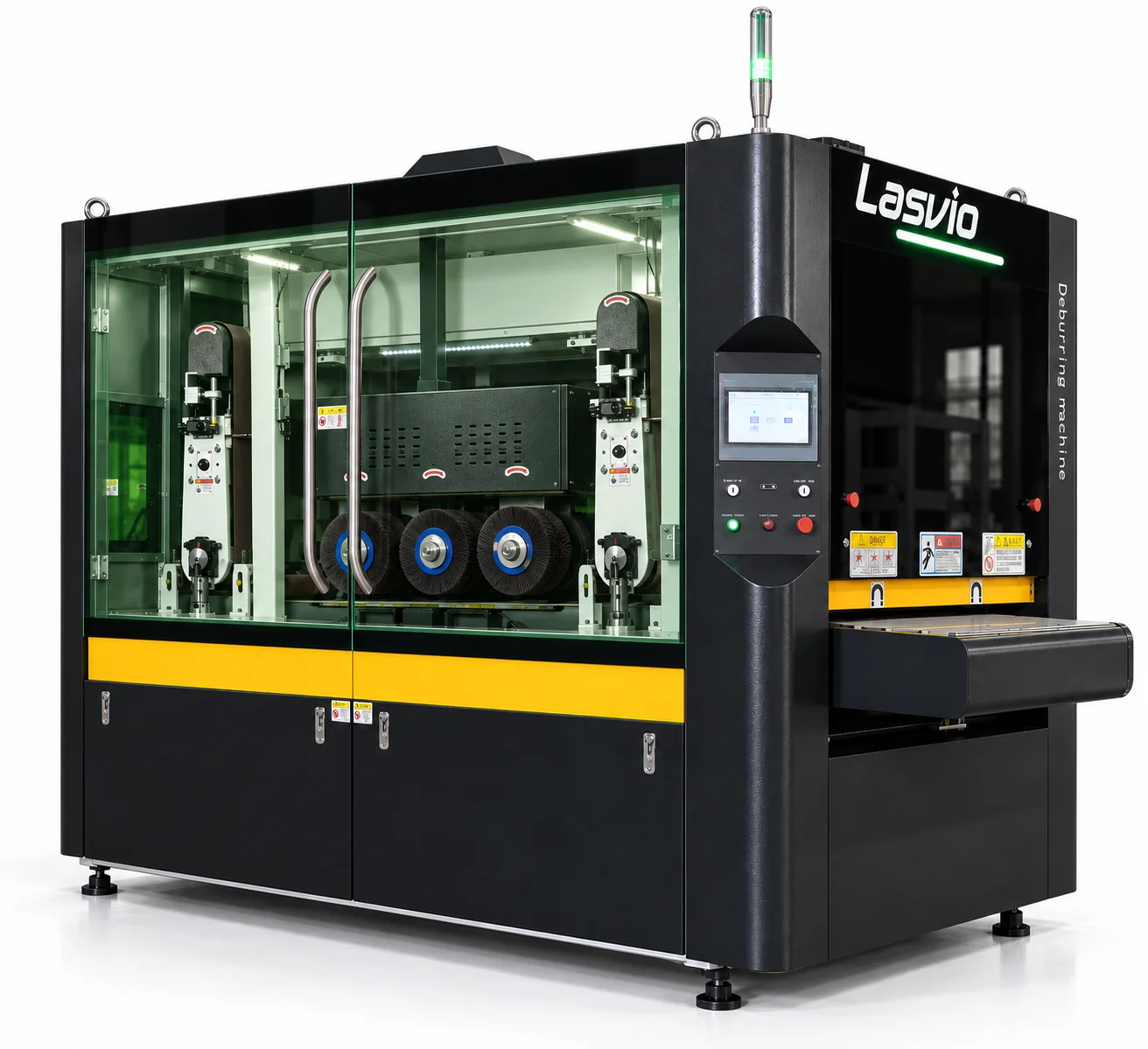
Deburr, round, then finish. The first belt takes the burrs off, the rotary brush group rounds every edge — and a final belt pass wipes away the brush marks and fine random scratches, leaving a clean, uniform surface. Built for appearance parts, especially nitrogen-cut stainless steel and aluminium.
- Abrasive belt + rotary brush group + final belt
- 800–1,600 mm working widths
- Clean, uniform surface — no brush marks
- Made for nitrogen-cut & cosmetic parts
BRB Quick Facts
Configuration: Abrasive belt + rotary brush group + abrasive belt
Working Widths: 800 / 1,000 / 1,300 / 1,600 mm
Best For: Appearance parts needing a clean, uniform finish — nitrogen-cut stainless steel and aluminium
Hold-Down: Magnetic (carbon steel) / vacuum (stainless steel, aluminium)
One-Pass Result: Deburred, rounded and surface-cleaned in one pass
Rounded Edges Are Only Half the Job
On a visible part, the surface matters as much as the edge. Rotary brushes round edges beautifully — but on stainless steel and aluminium they can leave fine random marks that show under light and under coating. The BRB adds a final belt after the brushes: it wipes those marks away and evens out the finish, so the part leaves deburred, rounded AND clean.
Nitrogen cutting makes this the everyday case: it leaves small, hard burrs on parts that are usually cosmetic — exactly the combination the BRB is built for. For standard parts where the finish is not critical, the BR is enough; for heavy burrs, see the BBR.
Inside the BRB: Belt, Brushes, Belt Again
Station 1 · Abrasive Belt
Removes burrs and levels the surface.
Station 2 · Rotary Brush Group
Rounds contours and hole edges.
Station 3 · Final Belt
Cleans the surface after rounding — wipes away brush marks and fine random scratches, leaving a uniform finish.
Hold-down for every material: a magnetic table holds carbon steel; a vacuum table holds stainless steel and aluminium flat — small parts run safely at full feed speed.
Why the Last Belt Matters
No Brush Marks
The final belt erases the fine random marks a brush group can leave on visible metal.
Cosmetic-Part Ready
Visible stainless and aluminium parts leave clean and even — ready for coating, or for the customer to see.
Built for Nitrogen-Cut Parts
Small, hard nitrogen-cut burrs removed, edges rounded, surface protected — the three things nitrogen-cut cosmetic parts ask for, in one configuration.
Before and After One BRB Pass
The same part before and after one BRB pass — edges rounded, the surface left clean.
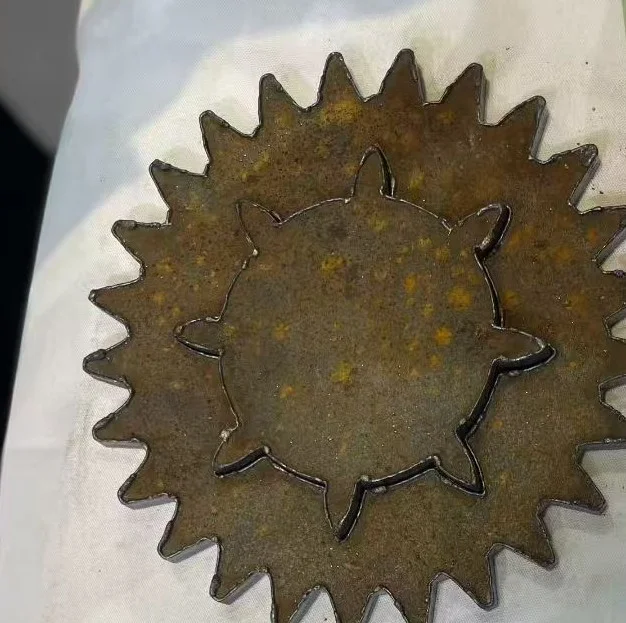
BEFORE
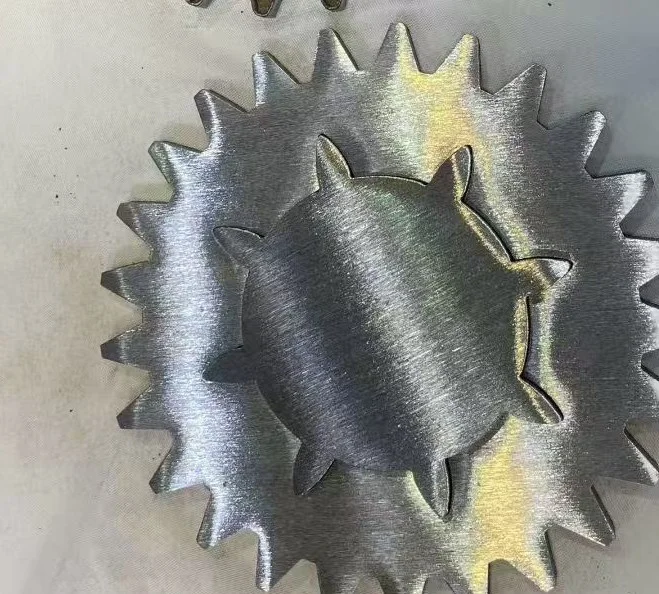
AFTER — ONE PASS
BRB Is the Right Choice When…
- The parts are visible — appearance and cosmetic parts
- Parts are nitrogen-cut stainless steel or aluminium
- The surface has to stay clean under light and under coating
- Burrs are light to medium and the finish matters most
Choose Another Configuration When…
Compare the Deburring & Edge Rounding Configurations
| Configuration | BR | HBR | BBR | BRB |
|---|---|---|---|---|
| Configuration | Belt + rotary brush | Hammer + belt + rotary brush | Two belts + rotary brush | Belt + rotary brush + belt |
| Main Result | Deburring and edge rounding for laser-cut parts | Slag removal with deburring and edge rounding | Heavier burrs with full edge rounding | Edge rounding with a cleaner, mark-free surface |
| Choose It When | Most laser-cut parts — the all-round configuration | Parts carry slag as well as burrs | The burr load is heavier than one belt can handle | Surface quality matters most, on cosmetic parts |
Compare all deburring & edge rounding configurations
BRB Technical Specifications
| Configuration | BRB — abrasive belt + rotary brush group + abrasive belt |
| Working Widths | 800 / 1,000 / 1,300 / 1,600 mm |
| Main Process | Deburring and edge rounding |
| Typical Parts | Laser-cut, thermal-cut, punched and sheared sheet metal parts |
| Processing Thickness | 0.5–80 mm |
| Feeding Speed | 1–5 m/min |
| Roller Brush Speed | 9–24 r/s |
| Revolving Speed | 9–24 r/s |
| Hold-Down | Magnetic table (carbon steel) / vacuum table (stainless steel, aluminium) |
| Power Supply | 380 V AC, 50/60 Hz (customizable) |
| Air Pressure Required | 0.5–0.8 MPa |
| Service | CE Certified · Global Service |
All listed safety, servo-control, electrical and auto-compensation features are standard equipment.
BRB Belt, Rotary Brush & Belt Deburring Machine — Frequently Asked Questions
What does the Lasvio BRB do?
The BRB deburrs, edge-rounds and finishes parts in one pass: a first abrasive belt removes the burrs, the rotary brush group rounds contours and hole edges, and a final belt cleans the surface — wiping away brush marks and fine random scratches for a clean, uniform finish.
Why does the BRB have a belt after the brushes?
Because brushes alone can leave fine random marks on visible metal. The final belt pass removes those marks and evens the surface, which is what cosmetic parts — and coatings — need.
Is the BRB the right deburring machine for nitrogen-cut parts?
Yes — nitrogen cutting leaves small, hard burrs, and nitrogen-cut parts are often cosmetic stainless steel or aluminium. The BRB removes those burrs, rounds the edges and protects the surface in one pass, which is why it is our standard recommendation for nitrogen-cut work.
BRB or BBR — which one should I choose?
Choose by what limits you. Heavy burr load on thicker plate: the BBR, with two belts up front. Surface quality on visible parts: the BRB, with its finishing belt at the end. Both round edges in the same pass.
How do I confirm whether BRB fits my parts?
Send the material, thickness and finish requirement — or arrange a sample test on your actual parts. If the surface demands are standard, we will point you to the BR instead.
Send Your Cosmetic Parts for a BRB Test
Edges rounded but the surface marked — or burrs you cannot remove without spoiling the finish? Send us the part details — or your actual parts — and we will run them through the BRB and show you the finished surface. If the finish demands are standard, we will point you to the BR instead.
Request a Quote Chat on WhatsApp
← Previous: BBR — Two Belts & Rotary Brush Next: BRP — Complete Finishing →